
Our Latest Articles
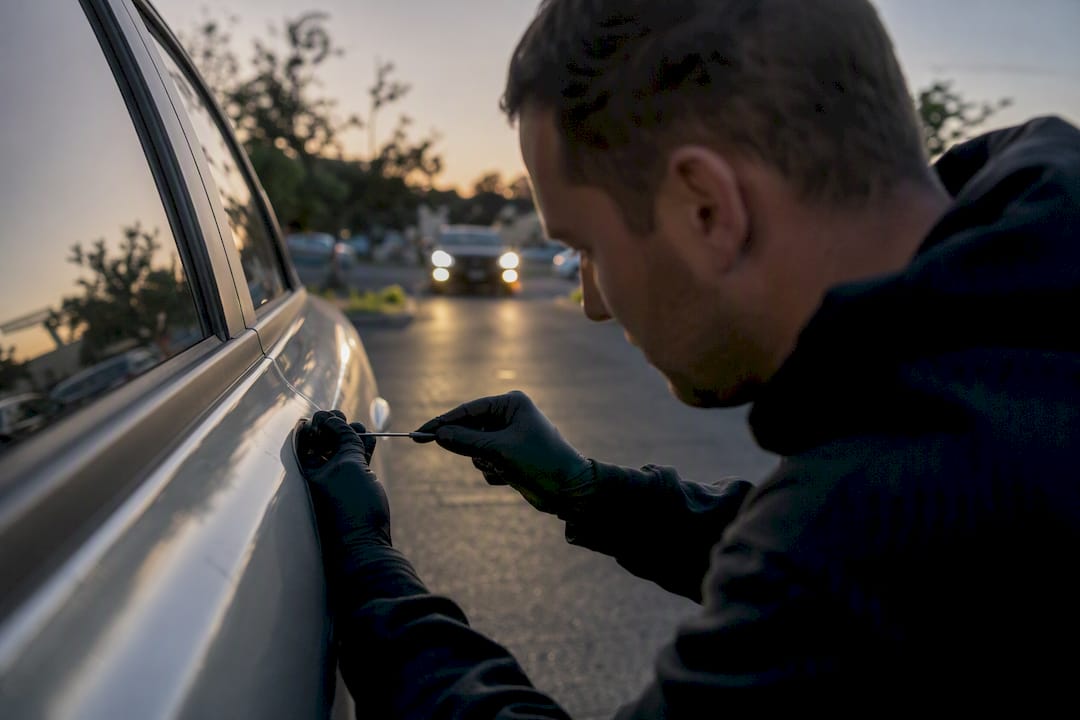
Emergency car entry workflow: safe steps to get back in
Locked out? Do not panic and do not reach for a coat hanger. Run through every door and the boot first, try your manufacturer’s phone app if the car supports digital key unlocking, and only pick up tools once those options are exhausted. This is the sequence firefighters and roadside crews call “try before you pry”: exhaust the free, zero-risk fixes before anything mechanical touches the door.
Immediate checks, in order:
- Check all four doors, the boot, and any fuel flap release.
- Try the manufacturer’s app or digital key if your car has one.
- Call a person with a spare key, or your roadside assistance provider.
- Call 999 immediately if a child, pet, or vulnerable person is locked inside on a warm day.
The AA notes that many modern vehicles connect via Bluetooth for exactly this scenario. If none of that works, move to the pre-entry checklist below rather than improvising with whatever is in the boot.
Key Takeaways
A safe emergency car entry workflow always tries free, non-destructive options first and reserves tools or forced entry for cases where nothing else works.
| Point | Details |
|---|---|
| Try obvious fixes first | Check every door, the boot, and the manufacturer app before reaching for tools. |
| Assess before touching the car | Spend 20 to 30 seconds confirming ownership, lock type, and the safest access point. |
| Use the right kit | An air wedge, plastic wedges, and a long-reach tool avoid the damage metal rods or slim jims cause. |
| Reserve glass-breaking for life threats | Only break a window when a person or animal inside is genuinely at risk. |
| Call Ecslocksmiths for deadlocks or smart keys | Ecslocksmiths provides 24/7 emergency callouts with upfront pricing and non-destructive entry methods. |
Table of Contents
- Pre-entry checklist: confirm and assess before you touch the vehicle
- Core tools and protection kit every non-destructive entry should use
- Air wedge and long-reach method, step by step
- When are digital keys or roadside help the better option?
- Which vehicles need a different approach?
- Safety, legality and documentation to protect everyone involved
- When should you call a locksmith instead?
- A short script for talking to the vehicle owner
- Before you leave: quick quality control and post-entry tests
- A locksmith’s take on doing this properly
- If you need help now, here’s how Ecslocksmiths can assist
- Sources
Pre-entry checklist: confirm and assess before you touch the vehicle
Before any tool touches the car, confirm you actually have the right to be doing this. Ask for a driving licence or vehicle registration document matching the number plate, or wait for the registered keeper to arrive.
Then run a fast scene check: is the vehicle locked or deadlocked, is the engine running, is anyone or anything inside, and is the car parked somewhere safe to work? A 20 to 30 second assessment before touching a door is standard professional practice, not wasted time. It tells you which door offers the easiest gap, whether central locking is likely to respond, and whether you are dealing with a simple lock or a deadlocked mechanism that needs a different plan entirely.
Quick assessment checklist:
- Confirm ownership or permission with photo ID or vehicle documents.
- Identify locked versus deadlocked, and check for a running engine or occupants.
- Choose the door with the largest workable gap, typically the front passenger side.
- Decide within 30 seconds whether this is a job for tools or a call for backup.
Pro Tip: Slide a soft cloth or trim protector along the door edge before inserting anything. Paint scuffs and trim scratches are the most common (and most avoidable) damage in a rushed entry.
Core tools and protection kit every non-destructive entry should use
A proper non-destructive kit is small, cheap, and does not rely on brute force. The standard professional set includes an inflatable air wedge, plastic wedges, a long-reach tool, a trim shield or soft cloth for the door edge, a torch, and thin gloves for grip and protection.
What belongs in the kit:
- Inflatable air wedge to create a controlled gap.
- Plastic wedges to hold that gap steady.
- Long-reach tool to hook the lock button, knob, or handle.
- Trim guard or folded cloth to protect paint and rubber seals.
- Torch and gloves for visibility and grip.
Skip anything metal that was not designed for this job. Coat hangers, metal rulers, and slim jims can slice wiring looms, trigger airbag sensors, or bend interior door panels beyond repair, which is precisely the outcome a non-destructive workflow is built to avoid.
Air wedge and long-reach method, step by step
This is the core technique behind most professional callouts, and it works on the overwhelming majority of standard locking systems. Under normal conditions, unlocking usually takes a few minutes once the right door is chosen.
- Pick the door with the widest natural gap at the top corner, usually the front passenger door (30 seconds).
- Protect the trim by laying a cloth or shield along the door edge and window frame (15 seconds).
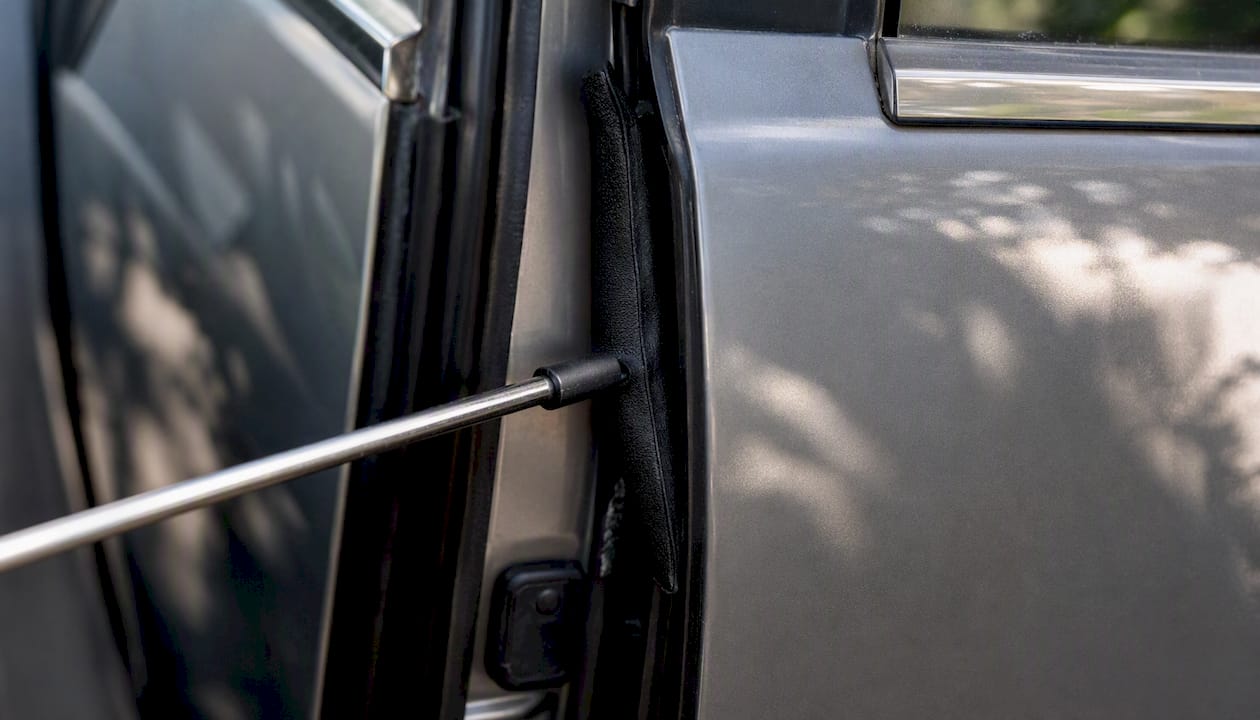
- Create a small gap by sliding the deflated air wedge into the top corner of the door (20 seconds).
- Inflate slowly, pumping in short bursts until the gap is just wide enough for the long-reach tool, never more (30 to 45 seconds).
- Insert the long-reach tool through the gap, watching the angle so it clears the window edge and airbag sensor housing (30 seconds).
- Hook the lock button, knob, or handle and pull or lift steadily to release it (30 to 60 seconds).
- Remove both tools carefully, checking the door and trim before closing the gap.
Common mistakes include over-inflating the wedge, which can stress the door frame or crack trim clips, and forcing the long-reach tool at the wrong angle, which risks catching wiring behind the panel. Go slowly near the top of the door on any vehicle with side-curtain airbags.
Pro Tip: Inflate the air wedge only as far as the tool needs to pass through. If you can see the long-reach tool clearly inside the gap, you have gone far enough. Stop there.
When are digital keys or roadside help the better option?
Not every lockout needs a wedge. If your car has a manufacturer app with digital key support, open it, confirm Bluetooth is active, and tap unlock. This is the fastest and lowest-risk option available when the car supports it.
A second key holder or a roadside assistance membership is next best. Many lockouts resolve through a spare key or a covered callout before any tool is needed, so check your policy before paying out of pocket. Lock manipulation and the string-loop technique (a shoelace or cord looped around an interior lock knob) can work on older mechanical locks but have a lower success rate on modern vehicles and take longer than a proper long-reach tool.
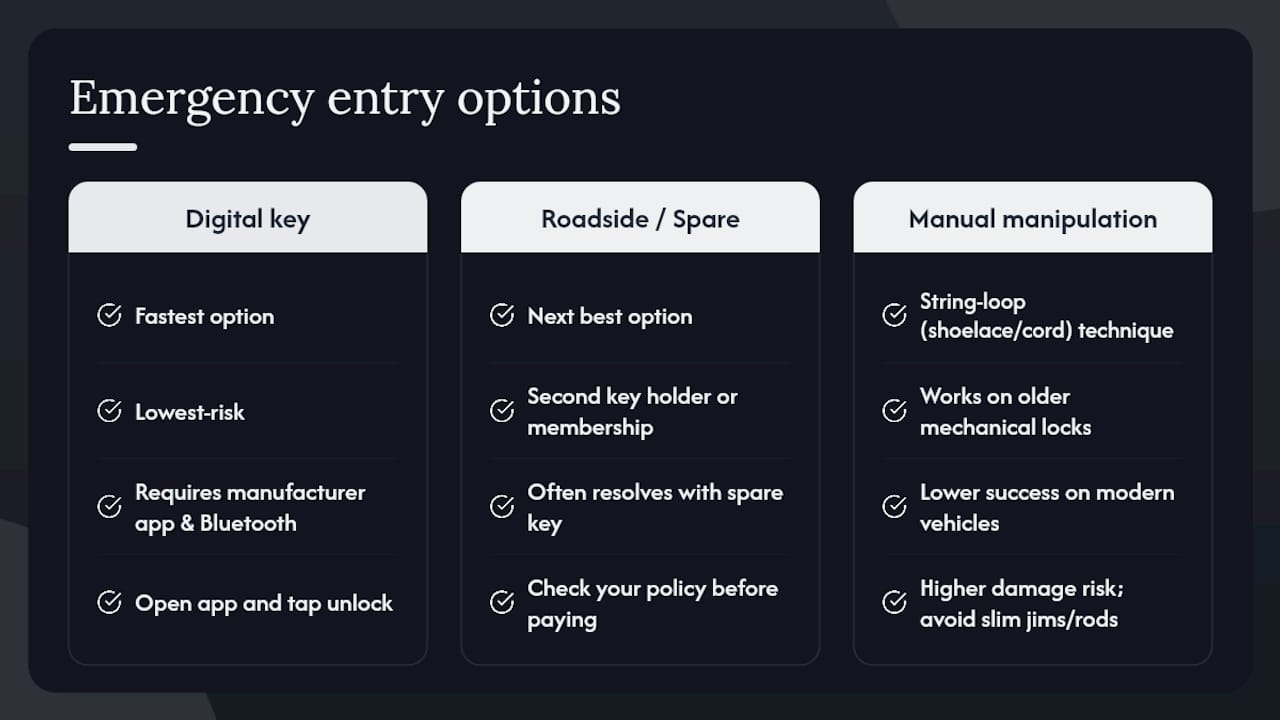
Avoid entirely: slim jims, improvised metal rods, or anything forced between the window and frame. These damage seals and wiring far more often than they succeed.
Which vehicles need a different approach?
Standard tools do not work on every car. Watch for these situations:
- Smart-key vehicles often lock automatically and may need the app or key fob within range rather than mechanical manipulation.
- Deadlocked doors disengage the interior handle entirely, so a long-reach tool hooking the handle will not open the door.
- High-security or luxury models sometimes hide mechanical access points that only a trained technician will know.
- Flat batteries rule out power-dependent central locking, so the approach shifts to mechanical access that does not stress the wiring or immobiliser.
Safety, legality and documentation to protect everyone involved
If a person or animal is at risk inside a hot or cold vehicle, call 999 immediately. Breaking a window is justified only in genuine life-threat situations; use a rear window away from occupants, tape it if you have tape to hand, and clear glass carefully afterwards.
Before starting non-emergency entry, record:
- Photo ID matched against the vehicle registration.
- The registration plate and location.
- A photo of the locked vehicle before you begin.
- Time started and finished.
A professional may ask you to sign a job sheet confirming consent and condition on arrival.
When should you call a locksmith instead?
Call a professional when the door is deadlocked, the vehicle uses a smart key with no working app, keys are lost rather than just locked inside, or you are running out of time and the risk of scratching paint outweighs the cost of a callout.
On arrival, a technician verifies ownership, assesses the lock type, uses protected entry tools such as air wedges and long-reach picks, and runs post-entry checks before leaving. Ecslocksmiths offers 24/7 emergency car entry across its service area, with verification steps built into every callout and clear pricing agreed before work begins.
A short script for talking to the vehicle owner
Open with something like: “I’ll use a non-destructive technique, an air wedge and a long-reach tool, which shouldn’t mark your paint or trim.” Follow with reassurance on timing and damage:
- “This typically takes a few minutes once I’ve assessed the door.”
- “I’ll check the seals and locks afterwards before I leave.”
- “I need to see ID or registration matching this vehicle before I start.”
Before you leave: quick quality control and post-entry tests
Once the door opens, do not walk away yet. Test the lock manually, check door alignment and seal contact, confirm central locking cycles properly, and retrieve the keys from inside before closing anything. Photograph any pre-existing marks you noticed during the assessment.
If electronics behave oddly after opening, a battery drain or an immobiliser fault triggered by the lockout is the usual culprit rather than anything caused by the entry method itself.
A locksmith’s take on doing this properly
Every job I look at starts with the same question: can this be opened without touching the paint? Non-destructive entry isn’t a nice add-on, it’s the entire discipline. The goal is always to hand the car back looking exactly as it did before the callout, just unlocked.
If you need help now, here’s how Ecslocksmiths can assist
Ecslocksmiths gets to you faster than most callers expect and quotes a fixed price before any tool touches your car, so there’s no surprise invoice on top of an already stressful morning. Emergency unlocks, key replacement and programming, and full post-entry checks are all handled on-site by technicians trained in the same non-destructive workflow covered above.
When you call, have your vehicle make and model, exact location, and whether the engine is running or anyone is inside ready to give straight away. That single detail often decides how the callout is prioritised. Ecslocksmiths runs a 24/7 emergency response service with upfront pricing agreed before work starts, so you know the cost before a technician arrives. If you are locked out right now, get in touch through the Ecslocksmiths contact page and describe your situation. Someone will talk you through next steps immediately.
Sources
- Locked keys in car | What to do | The AA
- Lock out of a vehicle — professional entry techniques & technician tutorial | Genius Roadside
- How to unlock a car with the keys inside — Popular Mechanics
- Locked keys in your car? What to do step by step (2026) | MoboKey
- Car Lockout Service | Damage-Free Entry | Snap Locksmith
What services do locksmiths in Ireland actually offer?
It’s more than just unlocking doors. Most locksmiths provide:
Emergency lockouts (home, car, business)
Lock repairs and replacements
Key cutting and rekeying
Security upgrades (e.g. anti-snap locks)
Car key replacement
How quickly can you respond to an emergency?
In emergency situations, typical arrival times should be at your location within 20-30 minutes. There are always professional locksmiths on standby, ready to handle any lockout or security emergency, ensuring safety is never compromised.
Can a lockmsith help with high-security locks and systems?
Absolutely! Most locksmiths specialise in advanced high-security lock systems, including electronic locks, biometric security, smart locks, and keyless entry systems. The should be trained in the latest security technologies, ensuring that they can provide the highest level of protection for your home, office, or vehicle. Ask for a free expert consultation to help you choose the right security system for your needs.
Will a locksmith provide a warranty on there services?
Yes, all locksmiths should stand by the quality of there work and offer a 100% satisfaction guarantee. Most would by default offer a warranty on all services, ensuring that you receive the best craftsmanship and long-lasting results.
Can a locksmith open Cars
Yes, most locksmiths are trained to open cars.
How quickly can a locksmith get to me in an emergency?
Most locksmiths in Ireland offer 24/7 emergency callouts and typically arrive within 15–60 minutes, depending on your location and traffic. In Dublin, response times can be as fast as 10–30 minutes, especially for emergency lockouts.
Can a locksmith open my door without damaging it?
Yes A professional locksmiths use non-destructive entry methods first. Drilling is usually a last resort, not the default approach.
If someone immediately suggests drilling without inspecting the lock, that’s a red flag.
How much does a locksmith cost?
Costs vary depending on the service, time of day, and complexity of the job. A standard lockout is usually cheaper than replacing a lock. Emergency or late-night services may cost more.
Prices vary, but here’s a realistic guide:
Standard callout/labour: €85–€95
Lockout service: from ~€85–€120+
Lock replacement: depends on parts + labour
Important: Always ask for a full quote upfront and if there is a call out fee. Some companies advertise low prices but increase costs after arriving.
Prices can vary quite a bit… call around for quotes!
Can you make a key without the original?
Yes A professional locksmiths use non-destructive methods whenever possible. Damage usually only happens if the lock is faulty, high-security, or has already been tampered with.
Do locksmiths in Ireland need to be licensed?
Yes. In Ireland, all locksmiths must be licensed by the Private Security Authority (PSA).
If you’re hiring someone:
Ask for their PSA licence number
Avoid anyone who can’t prove credentials
By asking for the licence you avoid the scammers.
Providing Locksmith Services For More Than 30 Years in Dublin, lock outs, lock fitting, slam locks, car opening, commerical and domestic.


Quick Links
Home
About Us
Services
Testimonial
Faqs
Legal
Privacy Policy
Terms & Conditions