Our Latest Articles

How to choose commercial locks: a practical guide
TL;DR:
- Choosing the correct commercial locks depends on their grade, type, and function based on door use, traffic, and security needs. Grade 1 locks are ideal for main entrances and high-traffic areas because of their durability and resistance, while choosing the wrong lock or grade leads to high maintenance costs and compliance issues. Conducting a thorough site assessment ensures each door receives a suitable lock to maintain security, safety, and regulatory compliance.
Choosing commercial locks is the process of selecting door hardware that meets the security demands, durability requirements, and code regulations of every door in a commercial property. Get it wrong and you face frequent failures, compliance breaches, and costly replacements. Get it right and your premises stay secure, your staff stay safe, and your insurance remains valid. This guide covers lock grades, types, functions, and a clear site assessment method so you can make informed decisions from the outset.
How to choose commercial locks: start with grade
Lock grade is the single most important factor in any commercial lock buying guide. The ANSI/BHMA grading system classifies commercial locks into three grades based on forced-entry resistance, cycle durability, and finish quality.
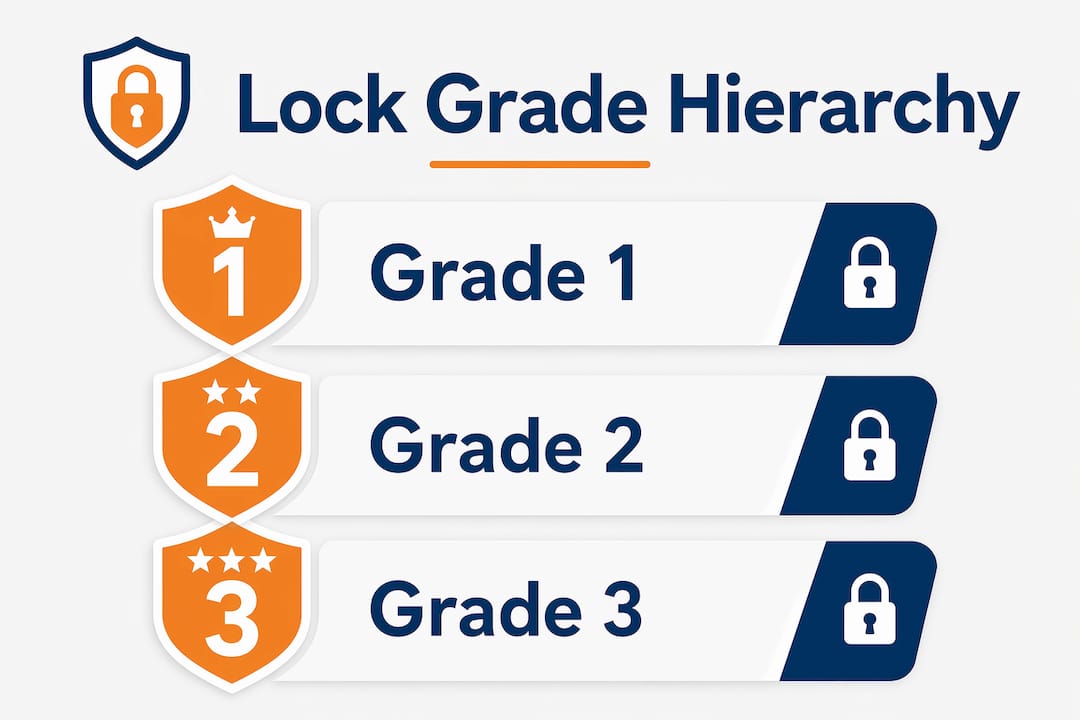
Grade 1 locks are the highest security rating available for commercial door hardware. They are the correct choice for exterior doors, main entrances, and any door that sees heavy daily traffic. Grade 2 sits in the middle and suits moderate-traffic interior doors such as office suites or meeting rooms. Grade 3 is the lightest classification and belongs only on low-traffic, low-risk doors such as storage cupboards.
The durability gap between grades is significant. Top-rated cylindrical locks can endure up to 100 million test cycles. To put that in context, a door cycled 200 times per day would take over 1,300 years to reach that figure. That level of endurance matters in hospitals, schools, and retail environments where doors open and close hundreds of times daily.
Pro Tip: Specify Grade 1 locks for all main entrances from the start. The upfront cost is higher, but the lifecycle cost is far lower than replacing Grade 2 or Grade 3 hardware that fails under heavy use.
| Grade | Typical application | Durability level |
|---|---|---|
| Grade 1 | Main entrances, exterior doors, high-traffic corridors | Highest: heavy commercial use |
| Grade 2 | Internal office doors, moderate-traffic areas | Medium: light commercial use |
| Grade 3 | Low-risk storage rooms, cupboards | Lowest: residential equivalent |
What are the main types of commercial locks?
The right lock type depends on door construction, traffic volume, and the level of security each opening requires. Selecting the wrong type creates compatibility problems that no amount of budget can fix after installation.
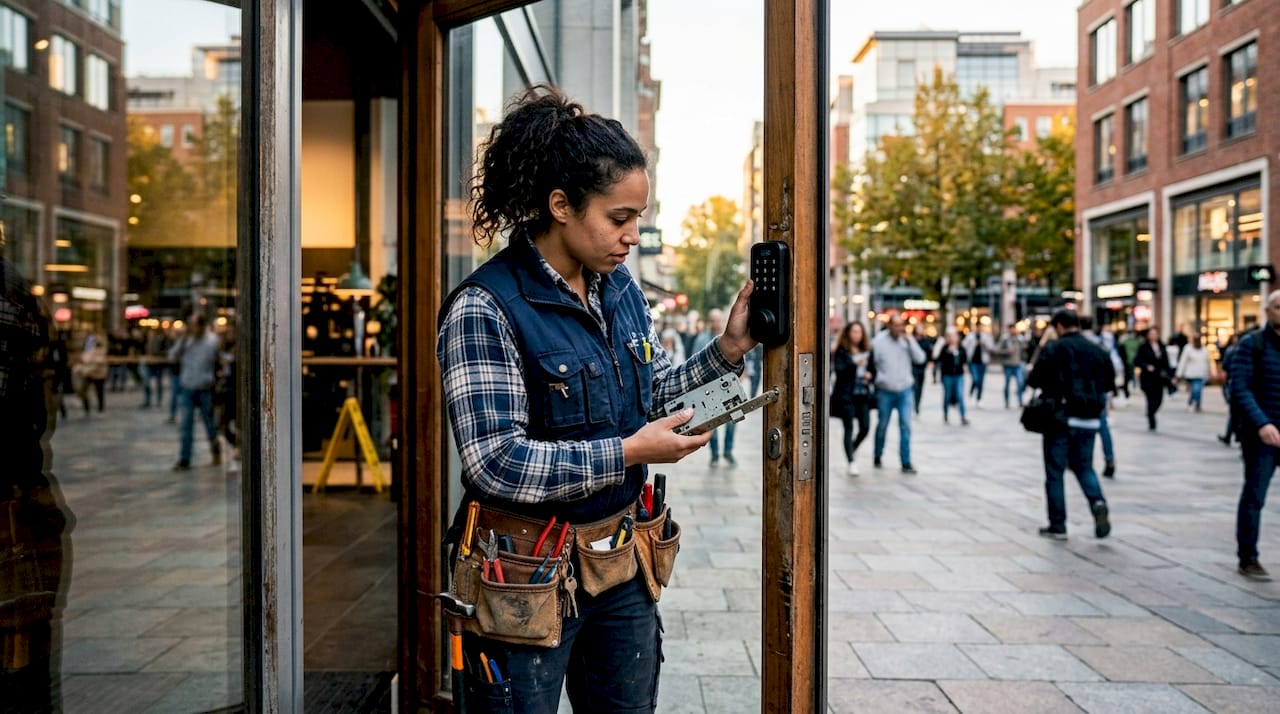
Mortise locks offer the highest mechanical security for timber and steel doors. They sit inside a pocket cut into the door edge, which makes them structurally stronger than surface-mounted alternatives. However, mortise locks require a door pocket and may not be retrofittable on hollow metal or glass doors without significant modification. Always confirm door construction before specifying a mortise lock.
Cylindrical lever locks are the workhorse of commercial interiors. They are faster to install than mortise locks and suit moderate-traffic doors such as office suites, staff rooms, and internal corridors. They do not offer the same forced-entry resistance as mortise hardware, so they are not appropriate for perimeter doors.
Deadbolts provide strong resistance to forced entry on exterior doors. That said, deadbolts may be unsuitable for interior doors that require quick egress, because they demand a deliberate turn of a key or thumbturn to open. Matching the lock function to the traffic pattern is critical to avoid both security gaps and safety risks.
Electronic keypad and smart locks remove the need for physical keys and allow access to be granted or revoked remotely. They integrate with access control platforms and produce audit trails, which is valuable for premises with multiple staff members or shift patterns.
Panic hardware is a legal requirement on many exit routes. Panic bars allow large groups to exit quickly and intuitively during an emergency without operating a knob or key. Any door on a designated egress route must have compliant panic hardware fitted.
Multipoint locks engage at multiple points along the door frame simultaneously. They are the preferred choice for perimeter doors where weather sealing and forced-entry resistance both matter.
| Lock type | Best application | Key feature |
|---|---|---|
| Mortise | Main entrances, timber or steel doors | High mechanical strength |
| Cylindrical lever | Internal office and corridor doors | Easy installation, moderate security |
| Deadbolt | Exterior doors, secure storage | Strong forced-entry resistance |
| Electronic keypad | Multi-staff premises, access-controlled zones | Keyless entry, audit trail |
| Panic hardware | Fire exits, egress routes | Code-compliant emergency egress |
| Multipoint | Perimeter and weather-exposed doors | Multiple locking points |
How does lock function affect compliance and accessibility?
Lock function describes how a lock operates in relation to who can open it, from which side, and under what conditions. Choosing the wrong function creates compliance failures that can shut down a building inspection or void an insurance claim.
Fire door compliance is non-negotiable. Installing non-certified locks on fire-rated doors voids the fire rating of the door assembly and can cause inspection failures. Every lock fitted to a fire door must carry UL or CE certification appropriate to the door’s fire rating.
Locks on fire-rated doors must be certified to the same fire rating as the door itself. A Grade 1 lock without fire certification fitted to a 60-minute fire door renders that door non-compliant, regardless of the lock’s mechanical quality.
Accessibility standards require lever handles rather than round knobs on doors used by the public. Round knobs demand a gripping and twisting motion that many people cannot perform. Lever handles open with a simple downward push, which satisfies accessibility requirements across most European and Irish building regulations.
Electronic access control integration demands hardware compatibility planning. Locks must be compatible with door closers, hinges, and electronic access control systems for the whole assembly to perform correctly. Incompatibility between components leads to operational malfunctions and security gaps that are expensive to diagnose and fix after installation.
Pro Tip: Request a door schedule from your architect or facilities manager before specifying any hardware. A door schedule lists every opening, its fire rating, traffic direction, and accessibility requirement. It removes guesswork and prevents costly specification errors.
Key lock functions to evaluate for each door:
- Passage: No locking mechanism. Suitable for internal corridors with no security requirement.
- Privacy: Locks from inside only. Correct for toilets and changing rooms.
- Storeroom: Always locked from outside; free egress from inside. Suits server rooms and secure storage.
- Classroom: Locked or unlocked from outside by key; always free from inside. Standard for offices and classrooms.
- Entrance: Key outside, thumbturn inside. The most common function for main commercial entrances.
What steps should you follow to assess your premises?
A site assessment is the foundation of any sound commercial lock selection. Buying locks without one is the equivalent of ordering a suit without taking measurements.
Work through every door in the building and record the following for each opening:
- Door construction: Timber, hollow metal, aluminium, or glass. Construction determines which lock types are physically compatible.
- Fire rating: Note the door’s rated period (30, 60, or 90 minutes) and confirm that any specified lock carries matching certification.
- Traffic volume: Estimate daily cycles. High-traffic doors need Grade 1 hardware as a minimum.
- Security level required: Classify each door as perimeter, internal secure, or internal non-secure.
- Accessibility requirements: Identify doors used by the public or staff with mobility needs and specify lever handles accordingly.
- Existing hardware: Note hinge type, door closer model, and frame material to confirm compatibility with new lock hardware.
- Budget versus lifecycle cost: A Grade 1 mortise lock costs more upfront than a Grade 2 cylindrical lock, but cutting corners on lock grade for main entrances leads to frequent failures and high replacement costs over time.
- Rekeying strategy: For large facilities, specify locks with Small Format Interchangeable Cores (SFIC). SFIC systems allow authorised staff to rekey a door in approximately 30 seconds using a control key, which cuts locksmith labour costs and minimises security disruptions when staff leave.
Once you have completed the assessment, group doors by function and grade, then specify hardware accordingly. This approach prevents the most common procurement mistake: applying a single lock specification across an entire building regardless of each door’s actual requirements.
Common mistakes and how to maintain commercial locks
The most costly error in commercial lock selection is underspecifying the grade for main entrances. Many property managers choose Grade 2 hardware to save money upfront, only to find the locks fail within two to three years under heavy use. Grade 1 hardware pays for itself through reduced maintenance and replacement costs.
Equally damaging is ignoring hardware compatibility. Fitting a new lock to a door with an incompatible closer or frame causes misalignment, which accelerates wear and creates security gaps. Always verify that the lock backset, handing, and mounting dimensions match the existing door preparation.
Skipping fire and safety compliance checks is the third major pitfall. Fire code non-compliance by using non-certified locks on fire doors risks voiding the door’s fire rating and invalidating insurance claims. This is not a theoretical risk. It is a documented cause of failed building inspections across Ireland and the UK.
Maintenance routines extend lock lifespan significantly:
- Lubricate lock cylinders and latch mechanisms every six months using a dry graphite or PTFE lubricant. Avoid oil-based products, which attract dust and cause jamming.
- Inspect strike plates and door frames for misalignment twice per year. A misaligned strike plate forces the latch bolt to work against the frame, which accelerates wear on both components.
- Test panic hardware monthly. Push the bar fully and confirm the door opens freely. Check that the bar returns to the latched position without assistance.
- Audit key control records quarterly. Remove access for former staff immediately and consider rekeying affected locks.
Pro Tip: Plan for future security needs when specifying locks today. Choosing a lock platform that supports electronic cylinder upgrades means you can add access control later without replacing the entire lock body.
Key takeaways
The best commercial lock selection matches grade, type, and function to the specific security demands of each door, not the building as a whole.
| Point | Details |
|---|---|
| Grade determines durability | Specify Grade 1 for all exterior and high-traffic doors to avoid premature failure. |
| Lock type follows door construction | Confirm door material and fire rating before selecting mortise, cylindrical, or electronic hardware. |
| Function must meet compliance | Fire door locks require UL or CE certification; egress routes require panic hardware. |
| Site assessment prevents errors | Record door type, traffic, fire rating, and accessibility needs before purchasing any hardware. |
| SFIC reduces ongoing costs | Small Format Interchangeable Cores cut rekeying time to 30 seconds and lower long-term labour costs. |
Why I think most businesses get this wrong from the start
After years of working in commercial security, the pattern I see most often is this: a property manager buys locks based on price per unit rather than door function. They fit Grade 2 cylindrical locks on a main entrance because the upfront saving looks attractive on a spreadsheet. Twelve months later, the lock is stiff, the cylinder is worn, and they are calling a locksmith for an emergency replacement. The total cost exceeds what Grade 1 hardware would have cost at the outset.
The second mistake I see is treating mechanical and electronic security as separate decisions. They are not. Effective commercial security integrates mechanical locks and electronic systems, and that integration requires compatibility planning from day one. Retrofitting electronic access control onto mechanical hardware that was never designed for it is expensive and often produces a system that works poorly.
My honest advice is to start with the door schedule, not the product catalogue. Know what every door needs before you look at a single lock specification. That discipline alone eliminates the majority of costly mistakes I see on commercial premises. If you are unsure where to start, a certified locksmith can walk through your building and produce a hardware schedule in a single visit. That hour of professional time saves far more than it costs.
— Barry
Ecslocksmiths: expert help with commercial lock selection
Choosing the right hardware for a commercial premises is a technical decision with real financial and legal consequences. Ecslocksmiths provides commercial locksmith services across Dublin, including site assessments, lock specification, supply, and installation for businesses of all sizes.
Whether you need Grade 1 mortise locks for a main entrance, panic hardware for fire exits, or an electronic access control system for a multi-staff office, Ecslocksmiths can advise on the correct specification for each door. The team works with certified, tested hardware and understands the fire safety and accessibility regulations that apply to commercial premises in Ireland. Contact Ecslocksmiths for a free estimate and get your lock selection right from the start.
FAQ
What is the best lock grade for a commercial main entrance?
Grade 1 is the correct specification for any commercial main entrance. It offers the highest forced-entry resistance and durability under heavy daily use.
Do commercial fire doors need special locks?
Yes. Locks fitted to fire-rated doors must carry UL or CE certification matching the door’s fire rating. Non-certified locks void the fire rating and can invalidate insurance.
What are Small Format Interchangeable Cores?
Small Format Interchangeable Cores (SFIC) are lock cylinders that authorised staff can swap out in approximately 30 seconds using a control key. They reduce rekeying costs significantly in large facilities.
When are panic bars legally required?
Panic bars are mandatory on exit routes in most commercial buildings where large numbers of people may need to evacuate quickly. Check Irish and local building regulations for the specific threshold that applies to your premises.
Can I fit the same lock type on every door in my building?
No. Door construction, fire rating, traffic volume, and accessibility requirements vary by opening. A single lock specification applied across an entire building will produce compliance failures and security gaps on doors with different needs.
What services do locksmiths in Ireland actually offer?
It’s more than just unlocking doors. Most locksmiths provide:
Emergency lockouts (home, car, business)
Lock repairs and replacements
Key cutting and rekeying
Security upgrades (e.g. anti-snap locks)
Car key replacement
How quickly can you respond to an emergency?
In emergency situations, typical arrival times should be at your location within 20-30 minutes. There are always professional locksmiths on standby, ready to handle any lockout or security emergency, ensuring safety is never compromised.
Can a lockmsith help with high-security locks and systems?
Absolutely! Most locksmiths specialise in advanced high-security lock systems, including electronic locks, biometric security, smart locks, and keyless entry systems. The should be trained in the latest security technologies, ensuring that they can provide the highest level of protection for your home, office, or vehicle. Ask for a free expert consultation to help you choose the right security system for your needs.
Will a locksmith provide a warranty on there services?
Yes, all locksmiths should stand by the quality of there work and offer a 100% satisfaction guarantee. Most would by default offer a warranty on all services, ensuring that you receive the best craftsmanship and long-lasting results.
Can a locksmith open Cars
Yes, most locksmiths are trained to open cars.
How quickly can a locksmith get to me in an emergency?
Most locksmiths in Ireland offer 24/7 emergency callouts and typically arrive within 15–60 minutes, depending on your location and traffic. In Dublin, response times can be as fast as 10–30 minutes, especially for emergency lockouts.
Can a locksmith open my door without damaging it?
Yes A professional locksmiths use non-destructive entry methods first. Drilling is usually a last resort, not the default approach.
If someone immediately suggests drilling without inspecting the lock, that’s a red flag.
How much does a locksmith cost?
Costs vary depending on the service, time of day, and complexity of the job. A standard lockout is usually cheaper than replacing a lock. Emergency or late-night services may cost more.
Prices vary, but here’s a realistic guide:
Standard callout/labour: €85–€95
Lockout service: from ~€85–€120+
Lock replacement: depends on parts + labour
Important: Always ask for a full quote upfront and if there is a call out fee. Some companies advertise low prices but increase costs after arriving.
Prices can vary quite a bit… call around for quotes!
Can you make a key without the original?
Yes A professional locksmiths use non-destructive methods whenever possible. Damage usually only happens if the lock is faulty, high-security, or has already been tampered with.
Do locksmiths in Ireland need to be licensed?
Yes. In Ireland, all locksmiths must be licensed by the Private Security Authority (PSA).
If you’re hiring someone:
Ask for their PSA licence number
Avoid anyone who can’t prove credentials
By asking for the licence you avoid the scammers.
Providing Locksmith Services For More Than 30 Years in Dublin, lock outs, lock fitting, slam locks, car opening, commerical and domestic.


Quick Links
Home
About Us
Services
Testimonial
Faqs
Legal
Privacy Policy
Terms & Conditions