
Our Latest Articles
What is rekeying? Your complete lock guide
TL;DR:
- Rekeying changes the internal pins of an existing lock, allowing a new key to operate it without replacing hardware. It is 50–70% cheaper than new locks, suitable for new occupants, lost keys, or key control, and typically takes 10–15 minutes per lock with professional service. For damaged locks or technological upgrades, replacement is recommended, and professionals can ensure proper rekeying efficiently and securely.
Most people assume that securing a property after moving house or losing keys means buying new locks entirely. That assumption costs more money than necessary. What is rekeying? It is the process of changing the internal pins inside your existing lock cylinder so that old keys no longer work and a fresh key takes over. The lock hardware stays in place. Only the mechanism inside changes. Understanding this distinction can save you a significant amount of money while delivering the same security outcome, whether you own a home, manage a business, or need vehicle security sorted.
Table of Contents
- Key takeaways
- What is lock rekeying and how does it work?
- When to rekey and when to replace locks
- How to rekey a lock: DIY vs professional
- The cost of rekeying locks
- My honest take on rekeying
- Get professional rekeying help in Dublin
- FAQ
Key takeaways
| Point | Details |
|---|---|
| Rekeying changes internal pins | The lock body stays fitted; only the pin configuration inside the cylinder is altered to suit a new key. |
| Costs far less than replacement | Rekeying is often 50–70% cheaper than buying and fitting entirely new lock hardware. |
| Ideal for movers and lost keys | Moving into a new property or losing a key are the two most common triggers for rekeying. |
| Professional service avoids risk | DIY kits exist, but minor errors can lead to lockouts or premature wear on the cylinder. |
| Multiple locks can share one key | A locksmith can rekey several locks simultaneously so a single key operates all of them. |
What is lock rekeying and how does it work?
Rekeying locks meaning is straightforward once you understand how a standard pin tumbler lock operates. Inside nearly every residential and commercial lock cylinder sits a series of small metal pins arranged in pairs. The top pins are spring-loaded, and the bottom pins vary in length. When you insert the correct key, the varying cuts along the key blade push those bottom pins to precise heights, aligning every pin pair exactly at what locksmiths call the shear line. At that alignment point, the cylinder rotates and the lock opens.
Rekeying changes the internal pins so the old key’s cut pattern no longer matches. The cylinder now requires a newly cut key to achieve that alignment. The lock body, the strike plate, and all the hardware bolted to your door remain completely untouched.
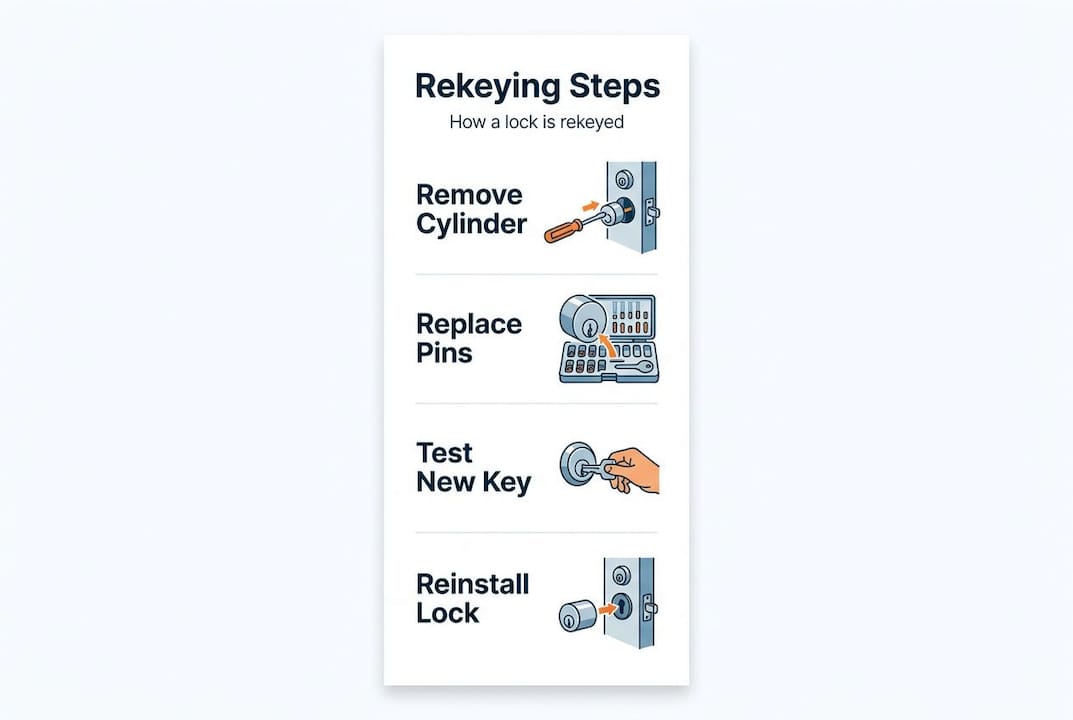
Here is what a locksmith does during a standard rekey:
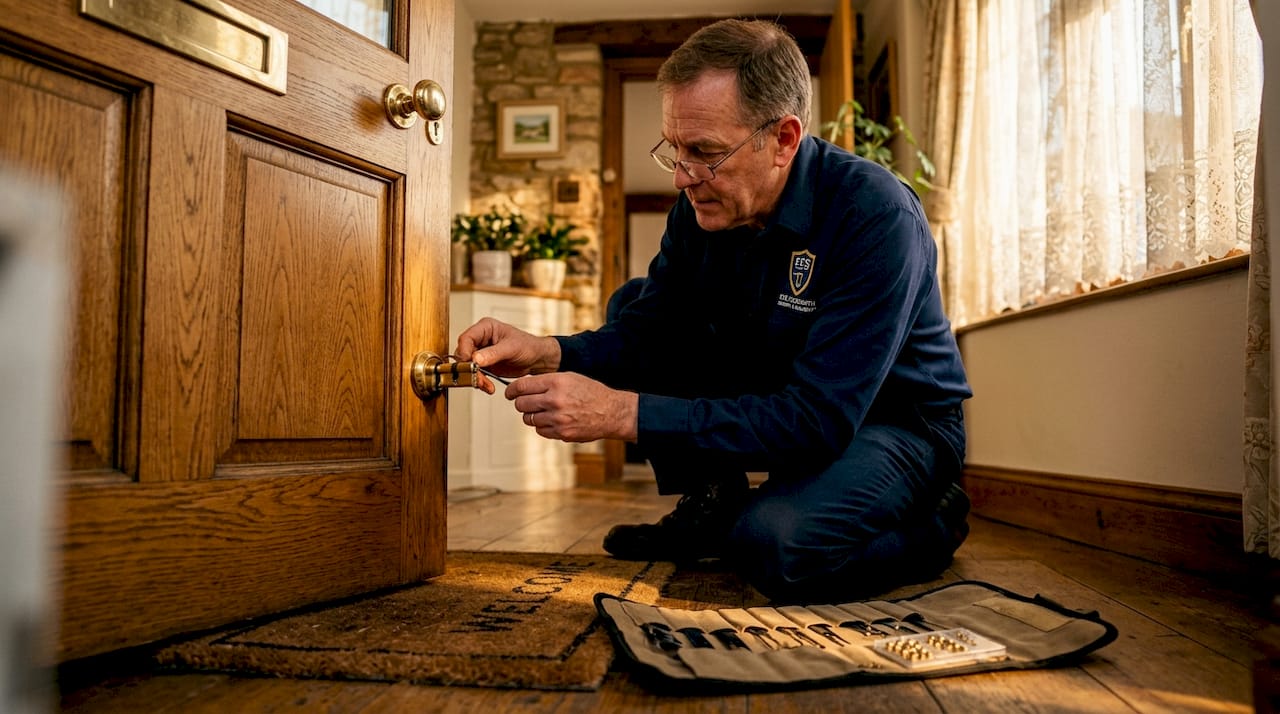
- Remove the lock cylinder from the door by extracting the retaining clip or unscrewing the lock body, depending on the design.
- Disassemble the plug (the inner rotating part) using a plug follower tool to keep the spring-loaded pins from scattering.
- Remove the existing driver and key pins from each chamber using a pinning tray to organise parts.
- Insert new key pins of the correct lengths that correspond to the new key’s cut pattern.
- Reassemble the cylinder, reinsert it into the lock body, and test the new key multiple times to confirm smooth operation.
An experienced locksmith completes this in as little as 10 to 15 minutes per lock, meaning a full house rekey often takes under an hour. Because the original hardware stays in place, the lock preserves its appearance and there is no waste from discarded hardware.
Pro Tip: If you have just moved into a new property, ask your locksmith to key all door locks alike at the same appointment. You get the security reset plus the convenience of one key for every door.
When to rekey and when to replace locks
Getting this decision right saves both money and frustration. Rekeying is the smarter choice in the majority of situations, but there are clear cases where replacement makes more sense.
Situations where rekeying is the right call:
- You have just moved into a new home or rental property and cannot account for every copy of the previous key. Rekeying is the first recommended step for new occupants.
- A key has been lost or stolen, making the original key useless the moment rekeying is complete.
- An employee with building access has left the company and you need to revoke their access quickly without replacing all hardware.
- You want to simplify access by keying multiple locks alike so staff or family members carry one key instead of a bulky bunch.
- The locks on your property are in good working condition and you simply need to change who holds a valid key.
When replacement is the better option:
- The lock is visibly damaged, worn, or difficult to operate. Rekeying a failing mechanism does not fix underlying mechanical problems.
- You want smart or keyless technology, such as a keypad, card reader, or Bluetooth-enabled lock. The existing hardware cannot accommodate these upgrades.
- The lock is an older, low-grade model that offers poor resistance to picking or forced entry. In this case, upgrading to a higher-security lock makes sense alongside any security review.
| Situation | Best choice | Reason |
|---|---|---|
| Moving into a new home | Rekey | Invalidates unknown copies of old keys quickly |
| Lost or stolen keys | Rekey | Immediately revokes access for lost key holder |
| Damaged or worn lock | Replace | Rekeying cannot repair mechanical failure |
| Upgrading to smart locks | Replace | New technology requires new hardware |
| Employee access revocation | Rekey | Fast and cost-effective for key control |
| Improving lock grade | Replace | Better security requires higher-grade hardware |
Pro Tip: Before deciding, have a locksmith inspect the lock’s condition. A cylinder showing signs of wear may cost more to rekey than to replace with a mid-range model.
How to rekey a lock: DIY vs professional
Understanding the steps involved helps you appreciate what a professional brings to the job and where DIY rekeying falls short.
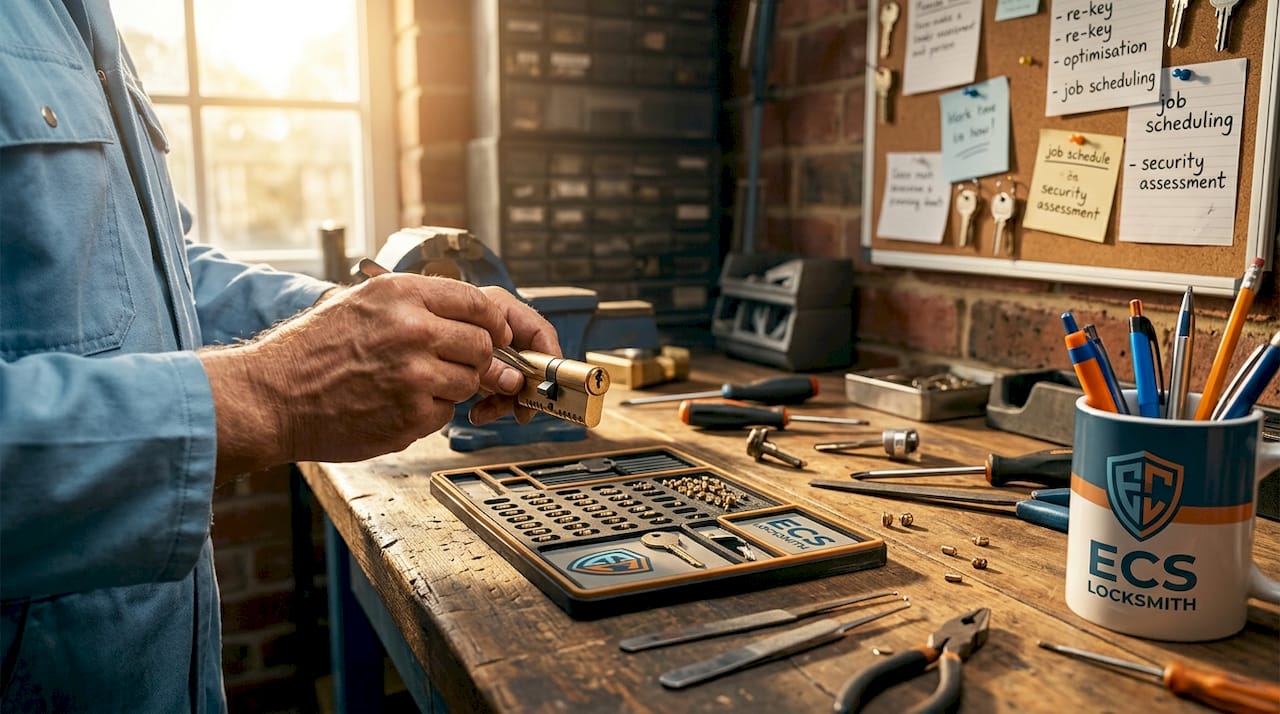
The tools required for rekeying a standard pin tumbler lock include a plug follower, a pinning mat, a key decoder or gauge, replacement pin kits (which come in varied lengths), and in some cases a special follower for restricted cylinders. Consumer rekeying kits are widely sold and work adequately for basic Kwikset-style locks that use a standardised pin system.
Here is an outline of the full process:
- Gather the correct pin kit matched to your lock brand and model. Using the wrong pin sizes is the most common DIY error.
- Remove the lock from the door and disassemble the handle or deadbolt to access the cylinder.
- Decode the current key to understand the existing pin lengths, then identify the pin lengths needed for the new key.
- Follow the plug follower method carefully. Removing the plug without a follower releases all springs and pins, which can be extremely difficult to recover.
- Load the new pins into each chamber in the correct sequence, matching the cuts on your new key.
- Reassemble, refit, and test the lock thoroughly before closing the door.
The problem with DIY rekeying is precision. Locksmiths advise professional service because even minor errors, such as a pin loaded in the wrong order or a spring seated incorrectly, can result in a lock that operates inconsistently or fails entirely. A lockout caused by a botched DIY rekey on a front door is both inconvenient and potentially expensive to resolve.
Rekeying a deadbolt or cylinder lock is one of those tasks that looks simple on video but depends heavily on experience with the specific lock model. A single pin loaded at the wrong height means the key either will not turn at all or will turn when it should not. Neither outcome is acceptable on a front door.
There is also a security consideration. A professional locksmith will spot worn pins, a damaged plug, or a compromised keyway during the rekeying process. A homeowner working from a kit is unlikely to notice these warning signs.
The cost of rekeying locks
Cost is one of the most practical reasons to consider rekeying. The rekeying cost is 50 to 70% lower than full lock replacement in most cases. For a homeowner with four or five external doors, that difference adds up quickly.
Several factors influence the final price:
- Number of locks being rekeyed. Most locksmiths charge a call-out fee plus a per-lock rate, so rekeying several locks in one visit brings the per-lock cost down considerably.
- Lock brand and complexity. High-security cylinders with anti-pick pins or restricted keyways take longer to rekey than standard models.
- Time of service. Emergency rekeying outside standard business hours carries a higher call-out charge.
- Location. Urban areas such as Dublin tend to have competitive pricing among locksmiths.
As a rough guide, a professional locksmith in Ireland typically charges between €15 and €30 per cylinder for rekeying when combined with a standard call-out fee. Rekeying a four-lock property in a single visit can cost a fraction of what four new lock sets would. Compare that with buying and fitting four new mid-range deadbolts, which could easily cost several hundred euro in parts and labour.
Pro Tip: Book a single appointment to rekey all locks at once. Most locksmiths discount the per-lock rate when handling multiple cylinders in one visit.
The time investment is equally attractive. Because the procedure takes only 10 to 15 minutes per lock, a complete home rekey rarely requires more than one hour of a locksmith’s time. You get your new keys on the day and your property is secure before the locksmith leaves.
My honest take on rekeying
Over the years, I have spoken with homeowners who spent considerably more on new lock sets when a simple rekey would have achieved exactly the same outcome. The word “rekeying” still confuses many people. They picture a complicated process or assume it offers lesser security than a brand-new lock. Neither is true.
In my experience, the first thing I recommend to anyone moving into a new property is to have every cylinder rekeyed before they sleep there. You have no idea how many copies of the previous key exist. A landlord, a tradesperson, a former partner, a neighbour who held a spare. Rekeying removes all of that uncertainty at a fraction of the cost of new hardware.
The mistake I see most often is people attempting a DIY rekey from a kit they found online, running into trouble, then calling a locksmith anyway. The savings rarely materialise, and sometimes the lock needs replacing because of damage sustained during the attempt. Save the effort and get it done properly from the start.
What I would caution against is treating rekeying as a substitute for assessing overall lock quality. If your locks are 20 years old and visibly worn, rekeying them prolongs an ageing system. Pair the rekey with an honest look at whether the hardware itself is still fit for purpose.
— Barry
Get professional rekeying help in Dublin

If you are ready to rekey your home, office, or rental property, Ecslocksmiths provides fast and reliable rekeying services across Dublin and the surrounding areas. Whether you have just moved in, lost a key, or need to update access after a change in staff, the team at Ecslocksmiths handles the job with accuracy and care. Every service comes with a satisfaction guarantee, and free estimates are available before any work begins. You can explore the full range of locksmith services in Dublin and get in touch directly through the services and booking page. Ecslocksmiths also covers emergency lockout assistance, lock installations, and security upgrades for residential and commercial clients.
FAQ
What is rekeying a lock?
Rekeying a lock means altering the internal pin configuration inside a lock cylinder so that only a new key will operate it. The existing lock hardware remains in place; only the pin sizes change.
How long does rekeying take?
A professional locksmith can rekey a standard lock in 10 to 15 minutes. A full home with multiple locks is typically completed within one hour.
Is rekeying as secure as replacing a lock?
Yes, provided the existing lock is in good working condition. Rekeying invalidates all previous keys immediately and restores full access control without the need for new hardware.
When should I rekey instead of replacing my locks?
Rekey when the lock is undamaged, functional, and you simply need to change which key operates it. Replace when the lock is worn, damaged, or you want to upgrade to a different lock type or technology.
How much does rekeying cost in Ireland?
Professional rekeying in Ireland typically costs between €15 and €30 per cylinder, plus a call-out fee. This makes it significantly more affordable than purchasing and fitting new lock hardware.
Recommended
What services do locksmiths in Ireland actually offer?
It’s more than just unlocking doors. Most locksmiths provide:
Emergency lockouts (home, car, business)
Lock repairs and replacements
Key cutting and rekeying
Security upgrades (e.g. anti-snap locks)
Car key replacement
How quickly can you respond to an emergency?
In emergency situations, typical arrival times should be at your location within 20-30 minutes. There are always professional locksmiths on standby, ready to handle any lockout or security emergency, ensuring safety is never compromised.
Can a lockmsith help with high-security locks and systems?
Absolutely! Most locksmiths specialise in advanced high-security lock systems, including electronic locks, biometric security, smart locks, and keyless entry systems. The should be trained in the latest security technologies, ensuring that they can provide the highest level of protection for your home, office, or vehicle. Ask for a free expert consultation to help you choose the right security system for your needs.
Will a locksmith provide a warranty on there services?
Yes, all locksmiths should stand by the quality of there work and offer a 100% satisfaction guarantee. Most would by default offer a warranty on all services, ensuring that you receive the best craftsmanship and long-lasting results.
Can a locksmith open Cars
Yes, most locksmiths are trained to open cars.
How quickly can a locksmith get to me in an emergency?
Most locksmiths in Ireland offer 24/7 emergency callouts and typically arrive within 15–60 minutes, depending on your location and traffic. In Dublin, response times can be as fast as 10–30 minutes, especially for emergency lockouts.
Can a locksmith open my door without damaging it?
Yes A professional locksmiths use non-destructive entry methods first. Drilling is usually a last resort, not the default approach.
If someone immediately suggests drilling without inspecting the lock, that’s a red flag.
How much does a locksmith cost?
Costs vary depending on the service, time of day, and complexity of the job. A standard lockout is usually cheaper than replacing a lock. Emergency or late-night services may cost more.
Prices vary, but here’s a realistic guide:
Standard callout/labour: €85–€95
Lockout service: from ~€85–€120+
Lock replacement: depends on parts + labour
Important: Always ask for a full quote upfront and if there is a call out fee. Some companies advertise low prices but increase costs after arriving.
Prices can vary quite a bit… call around for quotes!
Can you make a key without the original?
Yes A professional locksmiths use non-destructive methods whenever possible. Damage usually only happens if the lock is faulty, high-security, or has already been tampered with.
Do locksmiths in Ireland need to be licensed?
Yes. In Ireland, all locksmiths must be licensed by the Private Security Authority (PSA).
If you’re hiring someone:
Ask for their PSA licence number
Avoid anyone who can’t prove credentials
By asking for the licence you avoid the scammers.
Providing Locksmith Services For More Than 30 Years in Dublin, lock outs, lock fitting, slam locks, car opening, commerical and domestic.


Quick Links
Home
About Us
Services
Testimonial
Faqs
Legal
Privacy Policy
Terms & Conditions